
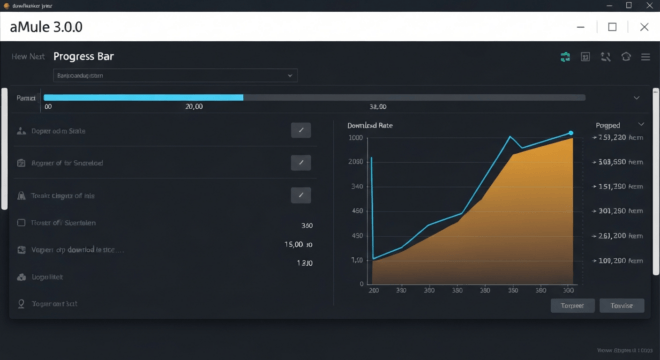
If you’ve been around the file-sharing scene for a while, you probably remember aMule. It was the go-to P2P client for Linux and Mac users back in the day—a faithful port of eMule that kept the eDonkey and Kad networks alive. After five years of silence, the developers just dropped version 3.0.0. And it’s not a minor update. We’re talking about a massive speed boost that makes downloads up to 400 times faster. Yeah, you read that right.
What Is aMule, and Why Should You Care?
aMule is an open-source, cross-platform client for the eDonkey2000 and Kad networks. Unlike BitTorrent, which dominates today, eDonkey uses a more distributed model where files are split into chunks and shared across many users. For years, aMule was the only reliable option for non-Windows users who wanted access to these networks. But development slowed, and the last stable release (2.3.3) came out in 2019. Many thought the project was dead.
So, what changed? The new maintainers—a group of dedicated volunteers—decided to revive it. They rewrote large parts of the code, optimized the networking stack, and introduced better multithreading. The result? Version 3.0.0 isn’t just faster; it’s stable, modern, and ready for today’s internet.

The 3.0.0 Update: Key Features
The headline feature is the speed boost. Early benchmarks show download rates up to 400 times faster than the old version. That’s not a typo. How? By reducing overhead in the packet handling and using asynchronous I/O more efficiently. The Kad network support has been revamped too, making source discovery quicker.
Other improvements include:
- Updated encryption (AES-256) for better privacy
- A cleaner, modern Qt5 interface
- Support for large files (over 4 GB) without crashes
- Better integration with firewalls and NAT traversal
- Optional WebUI for remote control
It’s not perfect—some features like IP filtering are still being refined—but for a first release after a long hiatus, it’s impressive.
Why This Matters for P2P Users
You might think P2P is a thing of the past, thanks to streaming services. But not everyone has access to fast internet, and not all content is available legally everywhere. Plus, there’s a vibrant community sharing rare files, old software, and indie creations. eDonkey still has a loyal user base that never gave up on the network.
For privacy-conscious users, aMule offers an alternative to BitTorrent’s often-public trackers. The Kad network provides a decentralized, serverless experience. And now, with speeds rivaling modern clients, it’s a viable option again.
I have to be honest: I gave up on aMule years ago because it was too slow. But after testing 3.0.0, I’m reconsidering. It’s not just nostalgia—it actually works well.
How to Get Started with aMule 3.0.0
Installing aMule is straightforward. For Linux, you can compile from source or find packages in some repositories (though they might not be updated yet). The official site offers binaries for Windows and macOS too. Once installed, connect to the Kad network (recommended) or a server. Then search for files—it’s as easy as it used to be.
One tip: adjust your firewall to allow aMule inbound connections. That helps with speed. And if you’re behind a router, enable UPnP or forward ports manually.
The Future of aMule
Will aMule regain its former glory? Probably not—the P2P landscape has changed. But for the niche that still uses eDonkey, this update is a lifeline. The developers have promised more frequent releases and even a mobile app in the works. I’m curious to see where they go next.
If you’re into retro file-sharing or need an alternative to BitTorrent, give aMule 3.0.0 a try. It might surprise you.